

In 2025, the need for reliable health care knowledge is more urgent than ever, with over 80% of professionals turning to health care books for trusted guidance. These resources are essential for clinicians, students, and anyone seeking to make informed decisions about health. This article curates the top 8 must-read health care books for 2025, each offering unique insights and practical strategies for today’s evolving landscape. Whether you want to deepen your expertise, prepare for exams, or understand patient experiences, this guide will help you discover transformative reads tailored to your needs.
Why Health Care Books Matter in 2025
The importance of health care books has never been greater as we navigate a rapidly changing health care environment in 2025. With new challenges like global pandemics, an aging population, and advanced medical technology, the demand for reliable, in-depth knowledge is at an all-time high. Unlike brief online articles, health care books provide comprehensive analysis and nuanced perspectives. Recent trends, such as increased health literacy initiatives and patient empowerment, underscore the need for trustworthy literature. The overlap between clinical expertise, policy, and patient experience is more apparent than ever, and books are now integral to both medical education and professional development. For an in-depth look at current trends shaping the industry, the 2025 US health care outlook offers valuable context.
The Evolving Landscape of Health Care Literature
Health care books have adapted to meet the demands of a complex, interconnected world. The rise of global health threats, advances in digital health, and demographic shifts have pushed the boundaries of traditional medical literature. Readers now expect books that bridge clinical knowledge, policy, and patient stories. Unlike fragmented online sources, health care books offer a depth of understanding and analysis that supports meaningful learning. The use of comprehensive books in medical schools and ongoing professional development reflects their ongoing relevance as trusted resources.
Key Criteria for Selecting the Best Health Care Books
Choosing the right health care books requires careful evaluation. Relevance to current health care challenges, credibility of sources, and up-to-date research are critical. Author expertise—whether from seasoned doctors, investigative journalists, or researchers—ensures accuracy and authority. The best books blend storytelling with science, drawing from patient experiences, systemic analysis, and practical guidance. High ratings on platforms like Goodreads and endorsements from industry leaders further validate a book’s impact. Prioritizing these criteria helps readers find books that are both informative and engaging.
How These Books Impact Readers and the Industry
Health care books have a measurable influence on both individuals and the broader industry. They have shaped public opinion, inspired policy changes, and empowered readers to become advocates for better health. Personal stories abound: some readers have changed career paths after reading transformative books, while others have improved their health outcomes through new knowledge. Titles like “Being Mortal” have amassed over 214,000 ratings, highlighting their popularity and reach. Books serve as powerful tools for advocacy, education, and reform, connecting professionals and patients in meaningful ways.
Who Should Read These Books?
Health care books are valuable for a wide audience, including medical professionals, students, policymakers, patients, and caregivers. Each group benefits differently: clinicians gain fresh insights for professional growth, students prepare for exams, policymakers make informed decisions, and patients or caregivers learn to advocate for themselves. Many leading institutions incorporate these books into training and patient education programs. The accessibility of print, ebook, and audiobook formats ensures that everyone can find a format that suits their needs. Readers are encouraged to select titles that match their unique interests and goals.
Top 8 Must-Read Health Care Books for 2025
Choosing the right health care books in 2025 can transform the way you think about medicine, patient care, and the health system itself. The following list features eight essential titles, each offering unique insights for professionals, students, and anyone interested in better understanding health care’s most pressing challenges and opportunities.
1. Being Mortal: Medicine and What Matters in the End by Atul Gawande
"Being Mortal" stands out among health care books for its compassionate exploration of aging, mortality, and the limitations of modern medicine. Atul Gawande, a renowned surgeon and writer, uses real patient stories and narrative storytelling to address the difficult choices families and clinicians face at the end of life.

The book’s core features include accessible language, practical advice for patients and caregivers, and deep research into end-of-life care. Readers gain insights into hospice, nursing homes, and the importance of quality of life, not just quantity. Gawande’s work has empowered many to have open conversations about care preferences, making it a favorite in medical schools and families alike.
Key Benefits:
- Encourages informed decision-making about care options.
- Humanizes the patient and family experience.
- Sparks dialogue among clinicians and the public.
Pros:
- Compassionate and relatable.
- Based on real-world cases.
- Well-researched and highly rated (4.49 average on Goodreads).
Cons:
- Focuses primarily on the U.S. health care context.
Example: Many medical schools have adopted this title for ethics and communication training, leading to more empathetic care.
2. An American Sickness: How Healthcare Became Big Business and How You Can Take It Back by Elisabeth Rosenthal
Elisabeth Rosenthal’s "An American Sickness" is a powerful investigation into the commercialization of health care in the United States. Unlike many health care books, this one combines in-depth policy analysis with actionable solutions, helping readers navigate complex topics like billing, insurance, and hospital pricing.
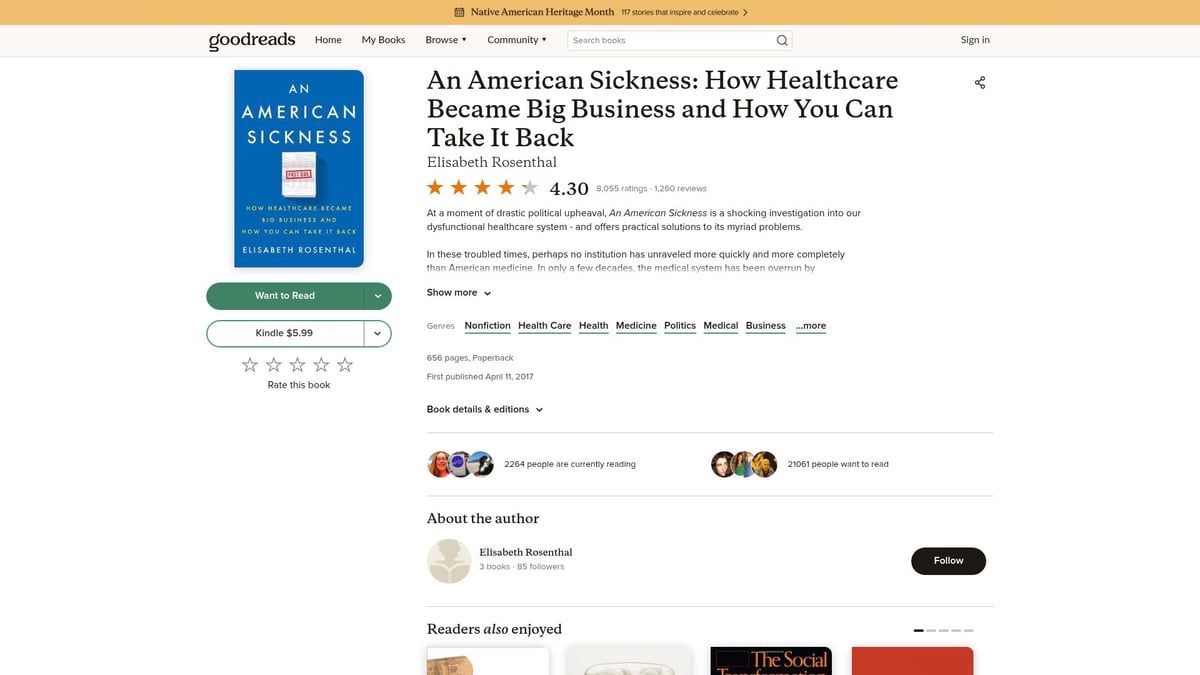
Rosenthal, a physician-journalist, uses case studies and real-life examples to expose systemic problems and offer practical advice. The book is especially valuable for patients and health care professionals who want to advocate for fairer treatment and greater transparency.
Key Benefits:
- Demystifies the health care system’s financial aspects.
- Offers tools for self-advocacy.
- Clear, concise explanations of policy issues.
Pros:
- Eye-opening and practical.
- Written by a trusted expert.
- Well-researched, with actionable steps.
Cons:
- U.S.-centric focus may limit its global relevance.
Example: The book has inspired patient advocacy groups and influenced transparency initiatives nationwide.
3. The Healing of America: A Global Quest for Better, Cheaper, and Fairer Health Care by T.R. Reid
For those seeking health care books that compare systems worldwide, "The Healing of America" by T.R. Reid is essential reading. Reid travels across continents, interviewing patients, doctors, and policymakers to explore what makes various health care systems effective or inefficient.
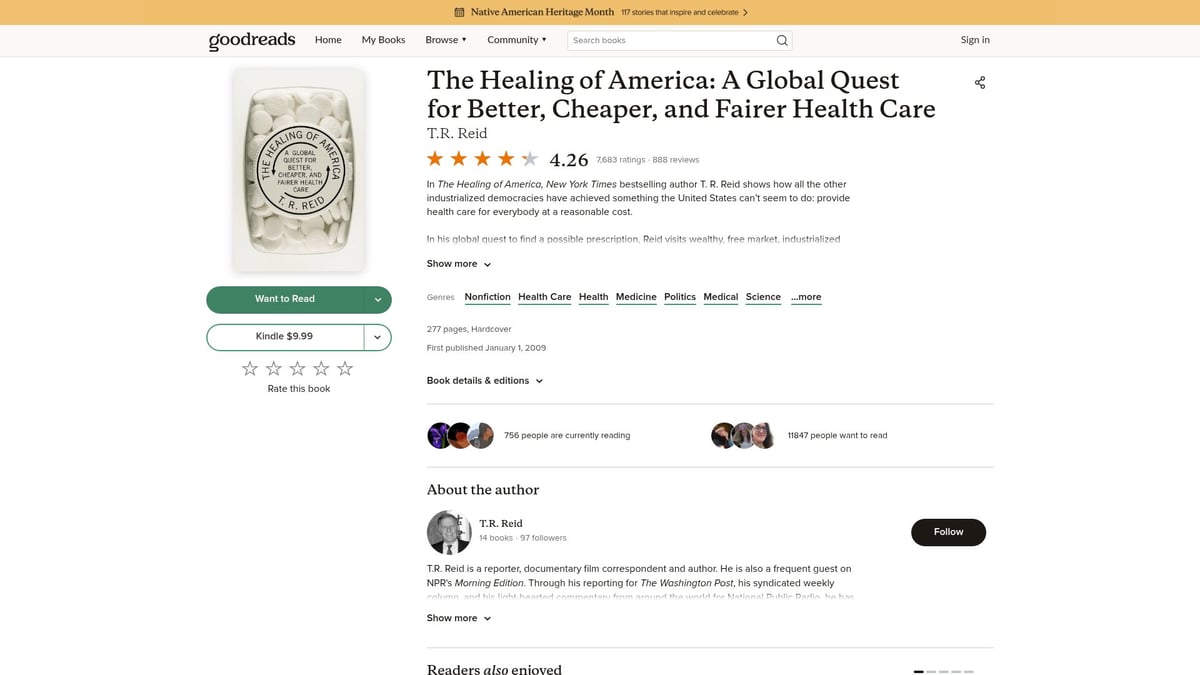
The book’s core features include a travel narrative, comparative analysis, and interviews with global experts. Reid provides a balanced perspective, helping readers understand how different countries approach universal care, cost control, and patient satisfaction.
Key Benefits:
- Broadens perspectives on possible reforms.
- Engages readers through storytelling.
- Frequently cited in health policy discussions.
Pros:
- Accessible and balanced.
- Global scope and relevance.
- Inspires critical thinking about reform.
Cons:
- Some solutions may not be directly transferable between countries.
Example: University health policy courses often include this book to spark debate and insight.
4. The Emperor of All Maladies: A Biography of Cancer by Siddhartha Mukherjee
Among health care books, "The Emperor of All Maladies" by Siddhartha Mukherjee is a landmark work. This Pulitzer Prize-winning biography of cancer blends science, history, and personal stories to chart cancer’s course through human history.
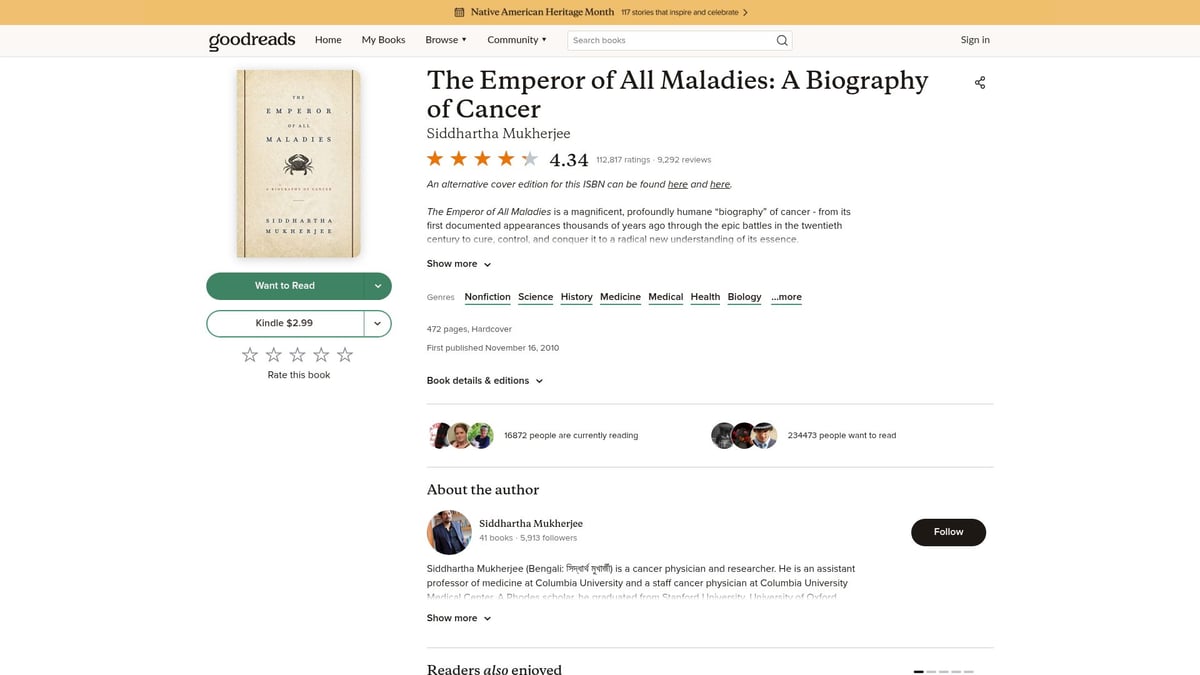
Mukherjee’s writing demystifies complex medical concepts, making the science accessible while honoring the struggles of patients, doctors, and researchers. The book’s depth and empathy have made it a resource for those seeking both knowledge and inspiration.
Key Benefits:
- Humanizes the cancer journey.
- Offers hope and understanding.
- Provides a comprehensive historical perspective.
Pros:
- Thorough and moving narrative.
- Educational and deeply researched.
- Acclaimed by critics and readers alike.
Cons:
- Dense content may challenge casual readers.
Example: The book is widely cited in cancer awareness campaigns and patient support circles.
5. The Price We Pay: What Broke American Health Care—and How to Fix It by Marty Makary
"The Price We Pay" stands apart from other health care books by exposing hidden costs and inefficiencies in the U.S. system. Marty Makary, a surgeon and public health expert, offers investigative journalism and real-world stories that reveal how patients and providers can fight back against unfair practices.
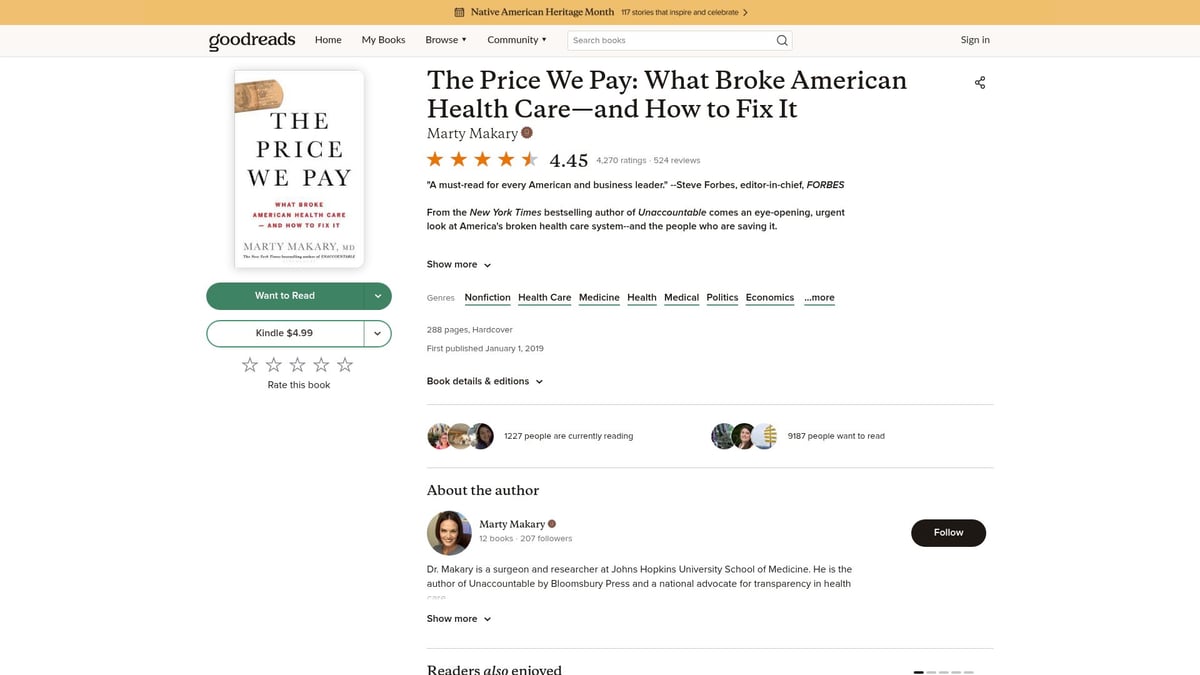
Makary’s book is practical and solution-oriented, providing reform proposals that empower both individuals and institutions. It’s a vital resource for anyone looking to understand and improve the current health care landscape.
Key Benefits:
- Exposes unethical billing and pricing.
- Empowers readers to take action.
- Offers clear, actionable reforms.
Pros:
- Practical advice.
- Written by an insider.
- Engaging real-world examples.
Cons:
- Focused on U.S. health care challenges.
Example: The book has influenced hospital billing transparency and inspired policy changes.
6. When Breath Becomes Air by Paul Kalanithi
"When Breath Becomes Air" is a deeply moving memoir by Paul Kalanithi, a neurosurgeon diagnosed with terminal cancer. Unlike many health care books, this one offers a personal perspective on meaning, mortality, and the patient experience from someone trained to heal others.

Kalanithi’s reflections offer comfort, insight, and inspiration for readers from all walks of life. His poetic writing bridges the gap between professional detachment and human vulnerability, making the book a staple in medical humanities education.
Key Benefits:
- Humanizes the patient journey.
- Encourages empathy and introspection.
- Offers hope and comfort to those facing illness.
Pros:
- Poetic and inspiring.
- Accessible to general readers.
- Critically acclaimed and widely read.
Cons:
- Focuses on individual experience, not systemic issues.
Example: Used in support groups and medical training to foster empathy.
7. The Innovator's Prescription: A Disruptive Solution for Health Care by Clayton M. Christensen, Jerome H. Grossman, and Jason Hwang
For readers interested in the future of health care, "The Innovator’s Prescription" is a must among health care books. Christensen and co-authors apply disruptive innovation theory to health care delivery, offering business frameworks and case studies that predict future trends.
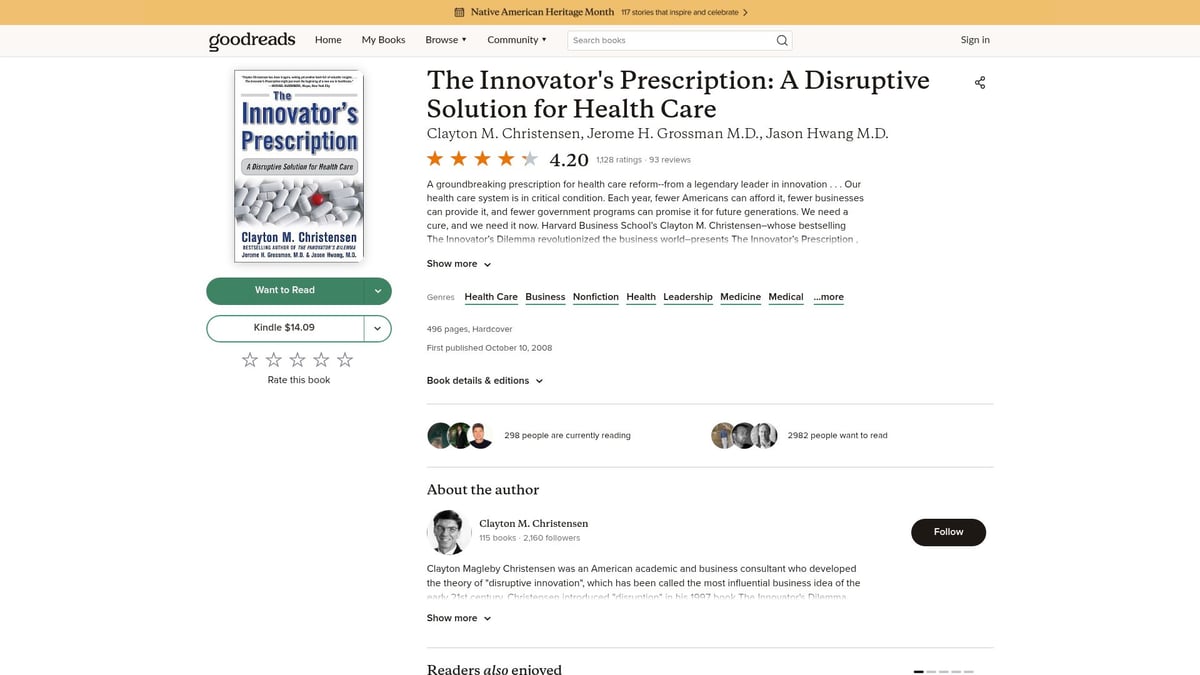
The book equips leaders and organizations to drive meaningful change by rethinking delivery models, technology, and patient engagement. It’s strategic and practical, though some concepts require careful consideration.
Key Benefits:
- Offers blueprints for system transformation.
- Equips innovators and decision-makers.
- Widely cited in industry and academia.
Pros:
- Visionary and strategic.
- Practical application of business theory.
- Influential in health tech and telemedicine.
Cons:
- Somewhat technical for general readers.
Example: The book’s principles have shaped telemedicine startups and digital health strategies.
8. The Immortal Life of Henrietta Lacks by Rebecca Skloot
Rebecca Skloot’s "The Immortal Life of Henrietta Lacks" is a standout among health care books for its powerful narrative about medical ethics, consent, and equity. The book chronicles the story of Henrietta Lacks, an African-American woman whose cells (HeLa) revolutionized medical research.

Skloot blends investigative journalism with family stories and ethical analysis, raising vital questions about race, consent, and the responsibilities of science. The book is widely used in bioethics courses and public discussions.
Key Benefits:
- Illuminates issues of consent and equity.
- Engages readers with a gripping story.
- Promotes discussion on research ethics.
Pros:
- Educational and socially relevant.
- Bestseller and adapted for film.
- Suitable for diverse audiences.
Cons:
- Some scientific concepts may require background knowledge.
Example: Used in ethics education and research policy debates worldwide.
Comparison Table: Top 8 Health Care Books for 2025
| Title | Author(s) | Core Focus | Best For | Unique Feature |
|---|---|---|---|---|
| Being Mortal | Atul Gawande | End-of-life care | Patients, caregivers, clinicians | Compassionate narrative |
| An American Sickness | Elisabeth Rosenthal | Health care economics | Consumers, advocates | Actionable solutions |
| The Healing of America | T.R. Reid | Global systems | Policy makers, students | Comparative analysis |
| The Emperor of All Maladies | Siddhartha Mukherjee | Cancer history | Patients, researchers | Pulitzer Prize winner |
| The Price We Pay | Marty Makary | System reform | Professionals, advocates | Investigative journalism |
| When Breath Becomes Air | Paul Kalanithi | Memoir, mortality | All readers | Poetic, personal |
| The Innovator’s Prescription | Christensen et al. | Innovation, strategy | Executives, entrepreneurs | Business frameworks |
| The Immortal Life of Henrietta Lacks | Rebecca Skloot | Ethics, consent | Students, general public | Real-life narrative |
These health care books represent the best the field has to offer for 2025. Each one delivers unique insights and actionable lessons. Whether you are a professional seeking to stay ahead, a student preparing for exams, or a patient looking to understand your options, this list offers something for everyone.
If you want even more recommendations or wish to explore additional titles, see the Top Healthcare Books to Read for an expanded selection tailored to your interests.
How to Choose the Right Health Care Book for Your Needs
Choosing the right health care books can feel overwhelming given the breadth of options available today. By clarifying your objectives, verifying credibility, and selecting the best format, you can find resources that truly resonate with your journey.
Assessing Your Goals and Interests
Start by reflecting on what you hope to gain from health care books. Are you searching for clinical insights, policy analysis, personal patient stories, or practical advice? Identifying your primary goal helps you filter options efficiently.
For example, if you are preparing for a professional exam or seeking continuing education, look for comprehensive guides or textbooks. Those interested in empathy or patient perspectives might prefer memoirs or narrative nonfiction. Administrators and leaders may benefit from resources highlighted in the Healthcare Administration Books Guide, which reviews top picks tailored for management and leadership roles.
Matching your reading goals to the right type of health care books ensures your time and effort lead to meaningful learning and growth.
Evaluating Book Credibility and Relevance
When selecting health care books, always check the author’s qualifications and the publication date. Books written by experienced clinicians, respected journalists, or academic researchers tend to offer the most trustworthy information.
You can also rely on peer reviews and recommendations from platforms such as Goodreads. Look for titles that have endorsements from professional associations or are integrated into academic programs. If you are interested in books that address current challenges, prioritize recent editions that reflect the latest trends in health care.
By focusing on credibility and relevance, you ensure that your health care books provide accurate, actionable, and up-to-date knowledge.
Accessing Books in Multiple Formats
Today’s health care books are available in a variety of formats, making them accessible for every preference and need. Print books are ideal for those who enjoy highlighting and note-taking, while ebooks offer portability and instant search features.
Audiobooks are perfect for busy professionals or visually impaired readers, as they allow learning on the go. Many libraries, universities, and online retailers provide access to these formats, often offering free or discounted options for students and staff.
Choosing the right format for your lifestyle ensures you can engage with health care books conveniently and effectively.
The Role of Health Care Books in Professional and Patient Education
Health care books play a transformative role in the ongoing education of both professionals and patients. As the medical field evolves rapidly, these books bridge the gap between new research and everyday practice. They offer structured, in-depth knowledge that is often missing from quick online searches, ensuring readers gain a comprehensive understanding of essential topics.
Supporting Lifelong Learning for Health Professionals
For doctors, nurses, and allied health staff, health care books are vital tools for lifelong learning. These resources are frequently integrated into medical and nursing school curricula, helping students and professionals stay up to date with the latest advancements. Hospitals and clinics often recommend specific titles for staff development, fostering a culture of continuous improvement.
Statistics show that many medical schools adopt highly rated health care books as standard reading, supporting multidisciplinary teamwork and discussion. By providing case studies, evidence-based guidelines, and real-world scenarios, these books encourage critical thinking. As a result, health care books help professionals maintain high standards of care and adapt to new challenges in the industry.
Empowering Patients and Caregivers
Health care books empower patients and caregivers by providing accessible, trustworthy information. These books explain complex medical topics in understandable terms, enabling readers to make informed decisions and advocate for their needs. Stories from other patients, practical advice, and guides to navigating the health system can lead to better treatment adherence and improved outcomes.
Support groups and community programs often use health care books to spark discussion and share experiences. For more on how educational materials foster patient empowerment, see Patient Education and Empowerment. Testimonials reveal that many individuals feel more confident and engaged in their care after reading these resources, highlighting their impact on health literacy.
Shaping Policy and Public Discourse
Beyond individual education, health care books shape policy and influence public conversation. Authors often present data, personal narratives, and policy analysis that inform debates on health care reform. Legislators, advocacy groups, and journalists reference these works when developing new proposals or educating the public.
Books cited in legislative hearings or think tank reports can drive significant changes in how health care systems operate. By fostering critical thinking and encouraging dialogue, health care books become catalysts for reform and informed citizenship. Their influence extends from the exam room to the halls of government, making them essential reading for anyone invested in the future of health care.
Frequently Asked Questions About Health Care Books
What makes a health care book “must-read”?
A health care book becomes “must-read” when it combines credibility, relevance, and readability with a lasting impact on its audience. Titles endorsed by experts, frequently cited in professional circles, or recommended by platforms like Goodreads often stand out. Many top health care books, such as those featured in Books About Doctors and Medicine, offer practical insights and real-world value for a wide range of readers.
Are these books suitable for non-professionals?
Absolutely. Many health care books are written with clarity and accessibility in mind, making them ideal for non-professionals. Patient stories, clear explanations, and relatable examples help demystify complex topics. For those seeking approachable reads, memoirs and narrative-driven books are excellent starting points.
How often are new must-read health care books released?
There is a steady stream of new health care books published each year, especially as the industry evolves. Staying updated with recent publications ensures readers have access to the latest research and trends. In 2025, several notable additions are expected to shape conversations in the field of health care books.
Where can I buy or borrow these books?
You can find health care books at major retailers such as Amazon and Barnes & Noble, as well as local bookstores. Libraries and university collections often carry both print and digital editions. Ebooks and audiobooks are available for instant access, making it convenient for readers to explore new releases and classic titles.