


The healthcare landscape is changing faster than ever, presenting both new challenges and exciting opportunities. For the healthcare professionals preparing for 2025, staying informed and adaptable is essential. This comprehensive guide offers the latest insights, practical strategies, and expert advice to help you thrive in a rapidly evolving environment. Discover key trends in technology, policy updates, workforce dynamics, patient engagement, and valuable resources—all designed to empower your practice and future-proof your career.
Navigating Healthcare Technology in 2025
Technology is reshaping every corner of the healthcare landscape. For the healthcare professionals, understanding and leveraging these advancements is essential to remain competitive, efficient, and patient-focused in 2025.

The Rise of AI and Machine Learning
Artificial intelligence is revolutionizing diagnostics and treatment planning for the healthcare professionals. AI-powered platforms, such as IBM Watson Health and Google Health AI, can analyze vast datasets to identify patterns, enabling earlier detection of diseases and more precise interventions. Machine learning algorithms are driving predictive analytics, helping the healthcare professionals anticipate patient risks and optimize care pathways.
A recent HIMSS 2024 survey found that 80% of healthcare executives plan to boost AI investments. However, challenges persist, including bias in algorithms, data privacy concerns, and integration with legacy systems. To address the growing demand for AI expertise, programs like the AI credential program for healthcare professionals are emerging, equipping clinicians with critical skills for the digital era.
Telemedicine and Remote Patient Monitoring
Telemedicine continues to expand, offering new ways for the healthcare professionals to connect with patients beyond the clinic. The adoption of remote patient monitoring devices, from smart wearables to IoT-enabled medical equipment, is improving access to care, especially in rural and underserved communities.
Since 2021, telehealth usage has risen by 38% according to McKinsey, making it a mainstay for routine consultations and chronic disease management. The healthcare professionals must stay current with evolving regulations, including reimbursement policies and licensure requirements, to maximize the benefits of telemedicine and ensure seamless patient experiences.
Electronic Health Records (EHR) Innovations
EHR technology is evolving rapidly, with cloud-based platforms and improved interoperability transforming data management for the healthcare professionals. Modern EHR systems, such as Epic and Cerner, prioritize secure data sharing and seamless integration with mobile health apps and patient portals.
Security remains paramount. Advancements in data encryption and multi-factor authentication are helping the healthcare professionals protect sensitive patient information. The latest ONC data shows that 92% of hospitals now use certified EHRs, highlighting the importance of staying updated on best practices and vendor options in this dynamic market.
Digital Therapeutics & Personalized Medicine
The healthcare professionals are increasingly using digital therapeutics to support patients with chronic conditions. These FDA-approved apps deliver evidence-based interventions, providing personalized care plans based on real-time patient data and genomic insights.
The integration of pharmacogenomics enables the healthcare professionals to tailor treatments to individual genetic profiles, improving outcomes and adherence. As digital therapeutics gain traction, expect further innovation in patient engagement tools and data-driven decision-making, making personalized medicine an everyday reality.
Cybersecurity in Healthcare
With healthcare cyberattacks on the rise, cybersecurity is now a top priority for the healthcare professionals. Ransomware threats and data breaches have impacted 60% of healthcare organizations in 2023, according to the Verizon DBIR. Implementing best practices—such as multi-factor authentication, robust staff training, and regular security audits—is essential.
Compliance with HIPAA, GDPR, and other regulatory updates is critical. Recent high-profile breaches underscore the need for vigilance and a proactive approach to safeguarding patient data. The healthcare professionals must build a security-first culture to protect both patients and their organizations.
The Role of Interoperability
Interoperability is key for the healthcare professionals seeking to deliver coordinated, high-quality care. Seamless data exchange across providers and platforms is becoming more feasible with FHIR standards and APIs, which enable better connectivity and population health management.
Despite these advances, challenges remain. Legacy systems, high costs, and a lack of standardization can hinder progress. Regional health information exchanges offer promising case studies, demonstrating how the healthcare professionals can overcome barriers and drive more effective collaboration across the care continuum.
Regulatory and Policy Changes: What to Expect in 2025
The regulatory landscape for the healthcare professionals is evolving quickly as 2025 approaches. Staying ahead of new policies, compliance requirements, and industry standards is essential for maintaining quality care and operational efficiency.

Evolving Healthcare Legislation
2025 will bring significant legislative updates affecting the healthcare professionals. New federal and state regulations, including a broader shift toward value-based care, are set to influence clinical workflows and reimbursement models. ICD-11 adoption is expected to impact billing and coding, requiring the healthcare professionals to update documentation practices.
Administrative tasks are likely to increase, with 65% of providers already reporting heightened burden due to policy changes (MGMA 2024). The upcoming HHS reorganization and workforce reduction will reshape healthcare administration and policy oversight, making it crucial for the healthcare professionals to stay informed and prepared for these transitions.
Data Privacy and Compliance
Data privacy remains a top concern for the healthcare professionals as HIPAA, GDPR, and regional privacy laws undergo updates. Enhanced patient data consent and transparency requirements are coming into effect, and non-compliance can lead to severe penalties.
The healthcare professionals must adopt robust risk mitigation strategies, such as regular audits and up-to-date security protocols. Recent expansions to CCPA and global data transfer rules add complexity to compliance. Tools for real-time compliance tracking and reporting are becoming indispensable, empowering the healthcare professionals to confidently navigate evolving privacy landscapes.
Licensure and Credentialing Changes
Multi-state practice is becoming more accessible for the healthcare professionals, thanks to the expansion of the Interstate Medical Licensure Compact and evolving telehealth licensing rules. These changes streamline credentialing processes, allowing faster onboarding and broader patient reach.
For nurses, updates to the Nurse Licensure Compact (NLC) simplify cross-state practice, which is especially beneficial for telemedicine. The healthcare professionals should prioritize staying current on licensure requirements to capitalize on these opportunities and ensure seamless service across state lines.
Insurance, Reimbursement, and Payer Trends
The shift toward bundled payments and alternative payment models is reshaping reimbursement strategies for the healthcare professionals. Payer-provider partnerships and direct contracting are on the rise, with 40% of payments now tied to value-based arrangements (CMS 2024).
Medicare Advantage and Medicaid policy changes will also impact reimbursement rates and contracting. To optimize revenue, the healthcare professionals must adapt by refining billing processes, leveraging technology for claims management, and exploring innovative care models that align with payer incentives.
Diversity, Equity, and Inclusion (DEI) Regulations
DEI regulations are expanding, requiring the healthcare professionals to address health disparities and social determinants of health proactively. New mandates encourage organizations to implement DEI training, with 72% of hospitals already doing so (AHA 2024).
Federal funding for DEI initiatives provides resources for compliance and reporting. Best practices include recruitment of diverse staff, mentorship programs, and transparent reporting. The healthcare professionals who embrace DEI strategies will be better positioned to deliver equitable care and improve patient outcomes.
Workforce Trends and Professional Development
The healthcare professionals are navigating a rapidly changing workforce landscape in 2025. Understanding key trends and prioritizing professional development is essential for meeting patient needs and sustaining high-quality care. Let us examine the most pressing workforce issues and the strategies that empower the healthcare professionals to adapt and thrive in this evolving environment.
Addressing the Healthcare Talent Shortage
The healthcare professionals face a significant talent shortage, especially among nurses, primary care providers, and specialists. Contributing factors include an aging workforce, widespread burnout, and lingering pandemic effects. According to the AACN, 1.1 million nurses will be needed by 2030.
To address this, the healthcare professionals should focus on:
- Targeted recruitment campaigns
- Retention incentives and career advancement pathways
- Upskilling and reskilling programs for existing staff
Efforts to expand educational pipelines and promote healthcare careers to younger generations are also vital for future stability.
Burnout, Mental Health, and Staff Wellbeing
Burnout remains a critical concern for the healthcare professionals. The Medscape 2024 report found that 54% of clinicians report burnout symptoms, which can negatively affect patient care and organizational performance.
Institutions are investing in:
- Mindfulness and stress reduction programs
- Access to counseling and mental health services
- Peer support groups and flexible scheduling
By prioritizing wellbeing, the healthcare professionals can foster resilience and maintain a productive, compassionate workforce.
Upskilling and Continuing Education
Continuous learning is essential for the healthcare professionals as technology and care protocols evolve. Emerging skills in digital literacy, genomics, and data analysis are increasingly in demand. Many professionals use online CME platforms and pursue micro-credentials to stay current.
Resources such as Healthcare books for professionals offer curated knowledge to help the healthcare professionals advance their expertise. In 2025, 78% of providers plan to pursue new certifications, underscoring the importance of lifelong learning in healthcare.
The Evolving Role of Allied Health Professionals
Allied health professionals are vital members of the healthcare team, and their roles are expanding rapidly. The healthcare professionals benefit from interprofessional collaboration, with nurse practitioners, physician assistants, and pharmacists taking on broader responsibilities.
The Bureau of Labor Statistics projects a 34% growth in physician assistant roles by 2032. Pharmacist-led chronic disease management programs demonstrate the value of team-based care, ultimately improving patient outcomes and access.
Diversity and Inclusion in the Workforce
A diverse workforce brings measurable benefits for the healthcare professionals, including improved patient outcomes and higher satisfaction rates. Recruitment and mentorship programs for underrepresented groups are expanding, and DEI training is now standard in many organizations.
Harvard Business Review links diverse teams to a 35% improvement in patient outcomes. The healthcare professionals who champion inclusion help create a more equitable healthcare system for all.
Flexible Work Models and the Gig Economy
The healthcare professionals are increasingly embracing flexible work models. Telecommuting, locum tenens, and per diem staffing options offer greater work-life balance and help address staffing shortages.
Technology platforms enable efficient scheduling and support the gig economy in healthcare. For example, gig platforms connect professionals with short-term assignments, improving access to care and allowing the healthcare professionals to tailor their work environment.
Empowering Patient Education with Mediscript
Empowering patients with clear, accessible information is a top priority for the healthcare professionals. Mediscript provides customizable, evidence-based health guides that support both professionals and institutions.
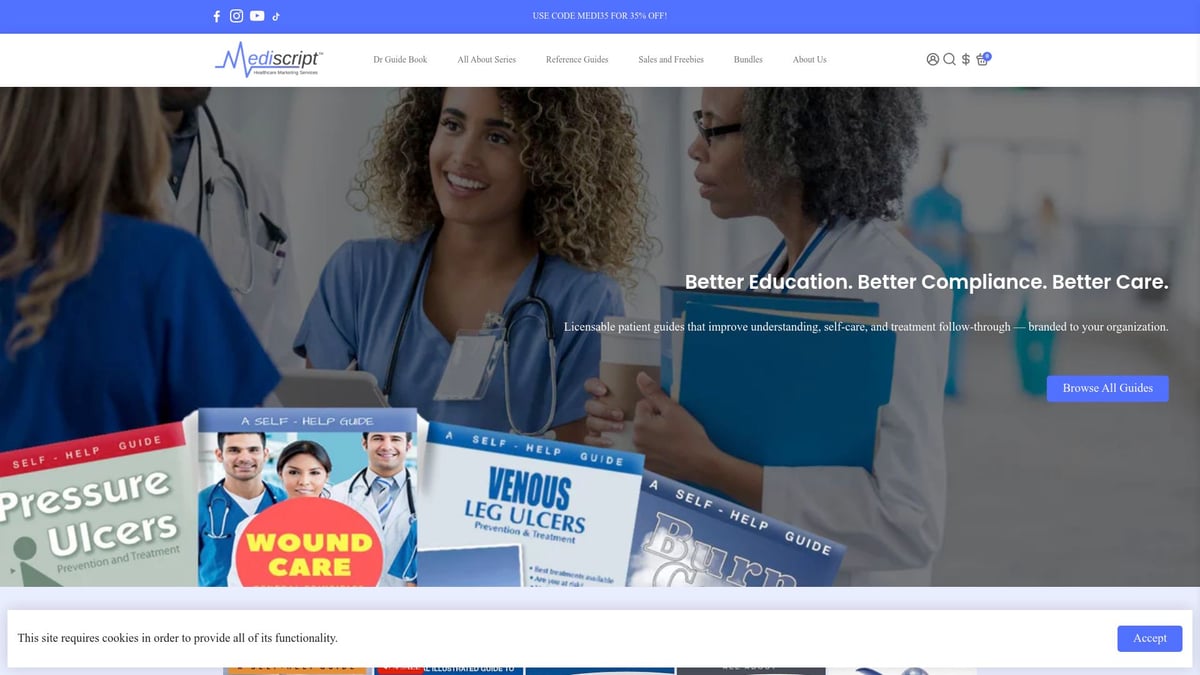
These resources include:
- Interactive checklists and visual aids
- Plain-language, multilingual materials
- Tools for ongoing professional growth
Trusted globally, Mediscript helps the healthcare professionals strengthen patient education, improve adherence, and enhance outcomes.
Enhancing Patient Engagement and Experience
Patient engagement is a defining factor in healthcare quality and outcomes. For the healthcare professionals, understanding evolving patient expectations and leveraging innovative strategies is essential to remain at the forefront of care in 2025. Explore the latest models, digital tools, and best practices that put patients at the center of every interaction.

Patient-Centered Care Models
Modern patient-centered care models are transforming the way the healthcare professionals approach treatment. These models emphasize holistic, individualized care, considering not just medical needs but also patients' values and preferences. Shared decision-making is at the heart of this approach, empowering patients to actively participate in their care planning.
For example, Patient-Centered Medical Homes (PCMH) integrate coordinated services, offering comprehensive care through a team-based structure. Studies show that 82 percent of patients prefer providers who involve them in decisions, underscoring the importance for the healthcare professionals to prioritize communication and collaboration. Adopting these models leads to better patient outcomes and higher satisfaction.
Digital Tools for Patient Engagement
Digital innovation continues to reshape engagement strategies for the healthcare professionals. Today’s patients expect convenient access to information and services. Mobile apps, patient portals, and SMS reminders have become essential for timely communication, appointment management, and medication adherence.
Virtual care navigation and symptom trackers further empower individuals to take charge of their health. Notably, 60 percent of patients now use at least one digital health tool. For practical tips on maximizing these resources, see Improving patient care strategies, which offers actionable insights for the healthcare professionals seeking to enhance engagement and outcomes.
Addressing Health Literacy and Accessibility
Health literacy remains a critical barrier for many patients, with 36 percent of U.S. adults having low health literacy. The healthcare professionals can bridge this gap by using plain language, visual aids, and providing multilingual resources. These strategies help patients better understand their diagnoses, treatment plans, and follow-up care.
Techniques such as the teach-back method and easy-to-read handouts are proven to boost comprehension and adherence. By prioritizing accessibility in communication, the healthcare professionals ensure all patients, regardless of background or education, receive equitable and effective care.
Remote and Home-Based Care
The shift toward remote and home-based care is accelerating. Hospital-at-home programs and home health services are expanding access, reducing costs, and improving comfort. Technologies such as at-home diagnostics and remote monitoring devices support the healthcare professionals in tracking patient progress outside traditional settings.
McKinsey estimates that 25 percent of hospitalizations could shift to home settings by 2025. Examples include remote cardiac monitoring and virtual wound care, which enhance safety and independence. For the healthcare professionals, embracing these models enables more flexible, patient-centered care delivery.
Culturally Competent Care
Cultural competence is essential for the healthcare professionals who serve increasingly diverse populations. Providing care that respects cultural differences, beliefs, and practices leads to higher satisfaction and better adherence to treatment plans. Training and resources are available to help staff address language barriers and unique health needs.
Utilizing interpreter services and culturally tailored educational materials is key. Research in JAMA links culturally competent care to improved outcomes and satisfaction. The healthcare professionals who invest in these initiatives build trust and foster stronger patient relationships.
Feedback, Satisfaction, and Reputation Management
Continuous improvement in patient engagement relies on gathering and acting on feedback. The healthcare professionals can use surveys, online reviews, and satisfaction tools to identify strengths and address gaps in service. Solutions like Press Ganey surveys and Net Promoter Score (NPS) offer measurable insights for quality improvement.
Online reputation increasingly influences patient choice. By proactively managing feedback, the healthcare professionals strengthen their reputation and demonstrate commitment to patient-centered excellence. Engaged patients become loyal advocates, driving sustained success and growth.
Future-Proofing Your Practice: Strategies for Success in 2025
Adapting to the future requires more than just keeping pace—it demands strategy, innovation, and resilience. For the healthcare professionals, 2025 brings a new set of challenges and opportunities. The following strategies offer a roadmap to ensure your practice thrives in a rapidly changing environment.
Embracing Innovation and Change Management
Innovation is the heartbeat of progress. In 2025, the healthcare professionals are expected to foster a culture that not only embraces new technologies but also manages change effectively. Utilizing change management frameworks like ADKAR and Kotter’s 8 Steps can guide teams through transitions, whether adopting telehealth solutions or upgrading EHR systems.
Leadership plays a pivotal role in setting the tone for innovation. By encouraging experimentation and learning from both success and failure, organizations can stay ahead. Notably, many forward-thinking groups look to TIME's Top HealthTech Companies 2025 for inspiration on emerging technologies and best practices.
Open communication, transparent planning, and targeted training are essential components. The healthcare professionals who prioritize these elements will be better positioned to adapt and succeed.
Data-Driven Decision Making
Harnessing data is no longer optional. The healthcare professionals who leverage analytics for both operational and clinical improvements can identify trends, forecast needs, and make informed choices. Real-time dashboards and benchmarking tools enable practices to track performance and outcomes with precision.
For example, predictive analytics can optimize patient flow management and resource allocation. According to industry reports, 70 percent of top-performing organizations use data analytics to drive strategy. Integrating data into daily decision-making processes empowers teams to act quickly and effectively.
Building a data-literate workforce ensures that insights are translated into action. Training staff to interpret analytics and fostering a culture where data informs every decision are crucial steps in this evolution.
Financial Sustainability and Practice Growth
Financial health is foundational for any practice. The healthcare professionals must diversify revenue streams, whether through new clinical services, strategic partnerships, or value-based care models. Exploring options like remote patient monitoring or wellness programs can open new opportunities for growth.
Cost control remains vital. Automation, outsourcing, and supply chain optimization help reduce overhead while maintaining quality. MGMA reports show that 55 percent of practices are investing in new service lines to remain competitive.
Regular financial reviews and scenario planning prepare organizations for market shifts. The healthcare professionals who proactively manage finances will build lasting stability in uncertain times.
Building Resilience and Crisis Preparedness
Resilience is built through preparation and agility. The healthcare professionals should draw on lessons from recent crises to strengthen emergency plans, supply chains, and staffing models. Practices that rapidly deployed mobile clinics or scaled telehealth services during disruptions demonstrated the value of flexibility.
Emergency preparedness drills and updated crisis protocols are now standard for leading organizations. According to the CDC, 80 percent of healthcare groups have revised their emergency procedures in the past year.
Prioritizing staff training and cross-functional teamwork ensures readiness. The healthcare professionals who invest in resilience can respond swiftly and maintain high-quality care, no matter what challenges arise.
Collaboration and Partnerships
Collaboration is at the core of modern healthcare. The healthcare professionals benefit from working in multi-disciplinary teams and forging partnerships with community organizations, payers, and technology firms. Integrated care networks and models like hospital-at-home or ACOs are transforming patient outcomes.
For deeper insights on collaborative models, explore integrated healthcare approaches, which highlight the benefits of teamwork and coordinated care.
Community engagement and shared resources amplify impact, particularly in population health. The healthcare professionals who embrace collaboration position themselves as leaders in an interconnected health ecosystem.
Environmental Sustainability in Healthcare
Environmental responsibility is gaining momentum. The healthcare professionals are increasingly focused on reducing their practice’s carbon footprint, implementing energy-saving measures, and adopting sustainable procurement policies.
Green certifications, such as LEED, and efforts to minimize medical waste are becoming industry standards. The healthcare sector accounts for 8.5 percent of U.S. emissions, making sustainability a pressing issue.
By choosing eco-friendly suppliers and optimizing resource use, organizations can improve their environmental impact and reputation. The healthcare professionals who prioritize sustainability contribute to a healthier planet and community.
Leveraging Professional Networks and Resources
Staying connected is essential. The healthcare professionals gain valuable support and knowledge by participating in professional societies, mentorship programs, and online forums. Platforms like LinkedIn groups and specialty associations provide access to the latest research and best practices.
Attending conferences and joining resource hubs helps teams remain agile in a changing landscape. Peer networks offer guidance, accountability, and a sense of community.
Ultimately, the healthcare professionals who invest in their professional networks and continuous learning are best equipped to navigate 2025’s evolving healthcare environment.